The Real Monsters: How True Crime Shaped the Horror TV Genre | Features

“If the devil is alive, it’s because he lived here.” — Quote from the Chicago Tribune, attributed to a worker involved in the demolition of John Wayne Gacy’s house.
While working as a columnist in the 1990s, I had one of the most gruesome experiences of my life when I gained access to the Cook County archives that housed the evidence against John Wayne Gacy.
A square-shaped piece of wood that served as a hatch leading to the crawl space of Gacy’s house. Gacy’s hand-drawn diagram of the crawl space, showing where some of the bodies were buried. A piece of rope that Gacy used to strangle one of his victims. Handcuffs and keys. Gacy’s appointment book for 1978-79. The jacket worn by Gacy’s last victim, Rob Piest, and a receipt from the pharmacy where 15-year-old Piest worked, the receipt that became a crucial piece of evidence in the case against Gacy.
I was barely 20 years old when Gacy was arrested in December 1979. Yet over time, I wrote a number of articles related to the case, including an interview with the mother of one of his victims. Over the years, I have met a number of real-life investigators and attorneys depicted in the Peacock series “Devil in Disguise: John Wayne Gacy.” It’s not that I claim any particular connection to this matter, but it is very real to me.
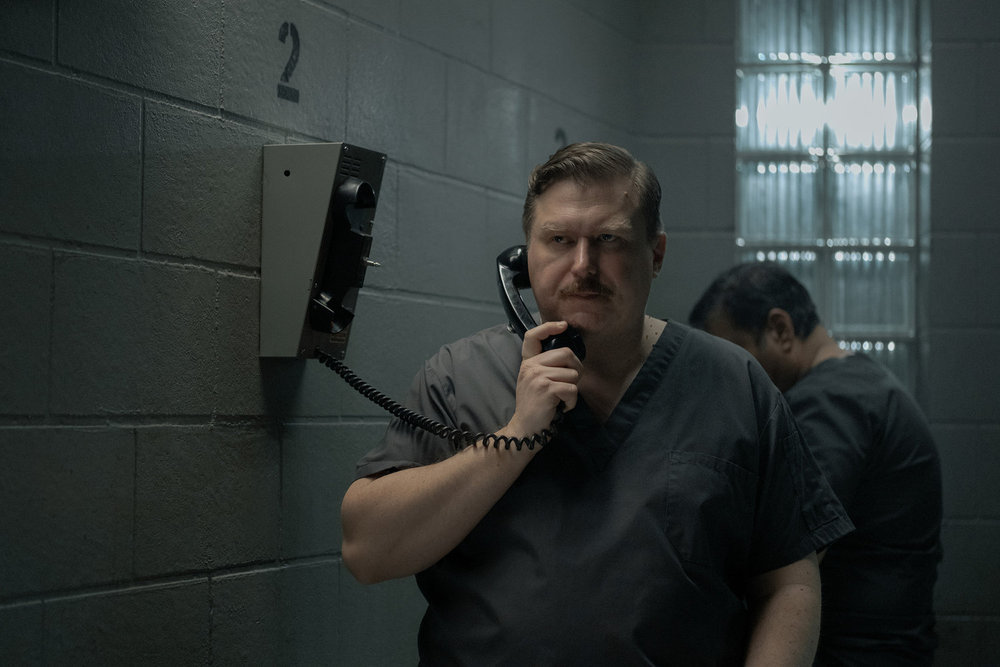
To its credit, “Devil in Disguise” is a dark procedural that focuses at least as much on the victims and their families, as well as the cops and lawyers, as it does on Gacy. Each episode, except the first, ends with archival photos and films, footage of real people depicted in the series, courtroom sketches, or snapshots of evidence. (A photo of Gacy’s crudely drawn map — the map I saw in that evidence room about 30 years ago — is shown at the end of Episode 2.) This particular series resonated with me because there was no hint of exploitation, and Gacy was not portrayed as a mysterious or powerful entity. Sure, he was a monster – but a monster in the form of a wannabe cop, a low-level political operative, a grotesque clown, a foul-mouthed, snarling predator. He was the rancid embodiment of what political theorist Hannah Arendt called “the banality of evil.”
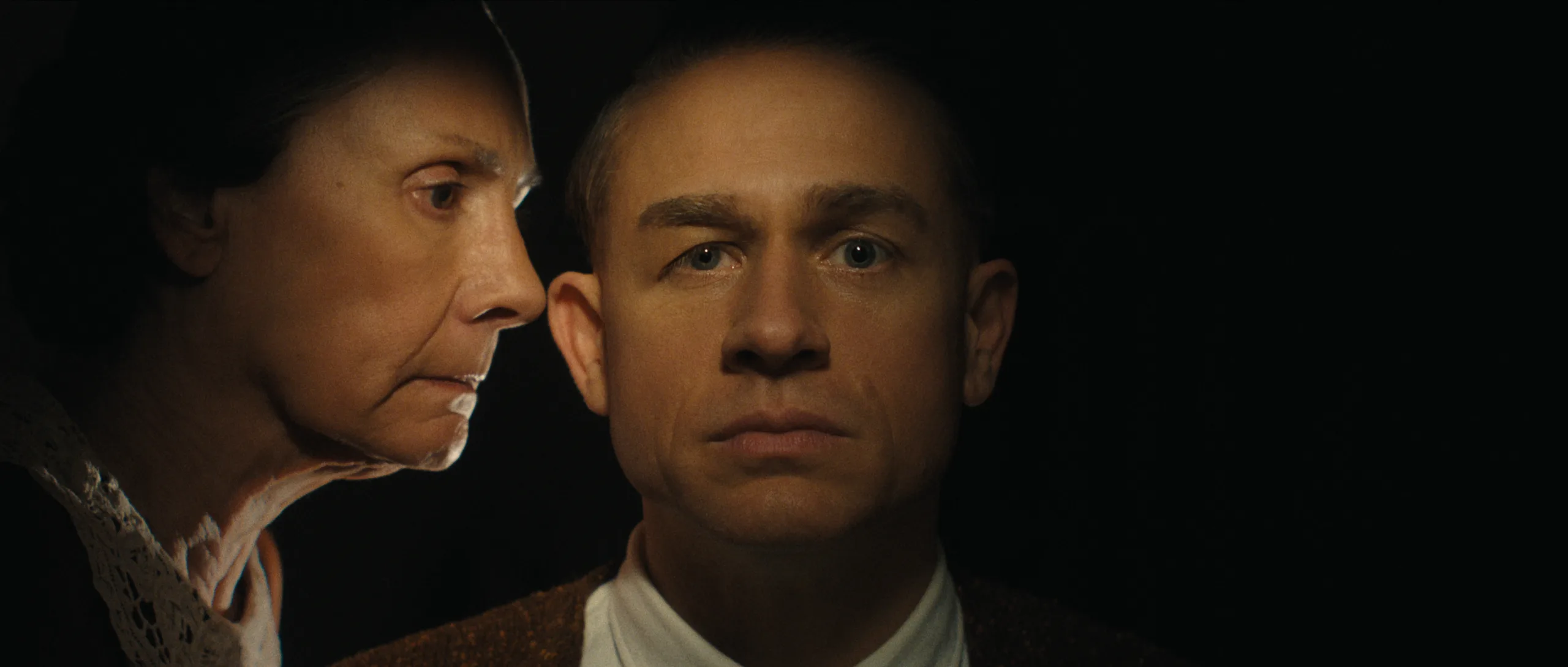
Yet while there are standout supporting performances in “Devil in Disguise,” the awards buzz is centered on Michael Chernus and his chillingly effective portrayal of Gacy. When we consider the ever-expanding library of fiction films and streaming series about serial killers, these are the star turns we remember. Darren Criss won an Emmy for his portrayal of Andrew Cunanan in “The Assassination of Gianni Versace: American Crime Story.” Jeremy Renner was the title character in the 2002 film “Dahmer,” and Evan Peters was nominated for an Emmy and won the Golden Globe for best actor for “Monster: The Jeffrey Dahmer Story.” Charlize Theron won an Oscar for her role as Aileen Wuornos in the feature film “Monster.” John Cusack was menacing and annoying as Robert Hansen, aka “The Butcher Baker,” in the theatrical release “Frozen Ground.” This month, in addition to the Gacy series, the great Jason Clarke underwent a major physical transformation to play Alex Murdaugh in the solid but sordid “Murdaugh: Death in the Family,” and the talented Charlie Hunnam was the title character in the execrable “Monster: The Ed Gein Story.” Our appetite for all things true crime is voracious.
At least 10 actors, including Mark Harmon, Chad Michael Murray and Zac Efron, have played Ted Bundy. TEN. The most notorious serial killers of the 20th century have been analyzed, fictionalized and scrutinized in so many true-crime podcasts, so many documentaries, so many dramatic interpretations, that they have essentially been transformed into modern-day bogeymen who fascinate, terrify and repel us on a visceral level that has a far greater impact than the old urban legends of the “Hook Handed Killer.” or the scribbling intruder. “Aren’t you glad you didn’t turn on the light?” with blood on the bathroom mirror.
Even fictional cinematic constructs are overshadowed by the mythology of real-life monsters. Sure, Ethan Hawke’s “The Grabber” in “The Black Phone” and Amy Madigan’s Aunt Gladys in “Weapons” are memorable modern monsters, but it’s the long-dead Gacys and Dahmers who make a generational impact in our nightmares, who continue to intrigue us decades after their heinous crimes. Michael Myers, Jason, and Ghostface have become cartoonish caricatures over the decades, but when we see graphic, bloody depictions of the crimes committed by people like Ed Gein and Ted Bundy, it affects us—and yes, fascinates us—on a deeper level. The shocking nature of these crimes is almost too horrific to witness; almost.
Why are we so obsessed with entertainment based on true crime, in all its forms? It’s a sort of psychological combo board. Many of us are programmed to crave the dark but undeniable thrill of embracing dread and terror. We love to be scared, whether it’s riding mega-roller coasters with names like Hades 360, Full Throttle, and Shivering Timbers, or paying to be scared via one of the more than 4,000 haunted house experiences that appear every fall, or embarking on a binge-worthy limited series about real-life murderers who became legend. We also enjoy playing amateur detective by diving deep into unsolved cases such as Zodiac and the Tylenol Killer. And, with the dramatizations of Manson, Bundy, Dahmer and Gacy, there is the satisfaction of seeing them arrested, put behind bars – and in some cases, executed.
As one of millions upon millions of fans of the true crime genre, I don’t usually feel guilty or uncomfortable consuming this material, but when I watched “Monster: The Ed Gein Story,” I asked myself: What are we doing here? In the final episode, there’s an incredibly vapid fantasy musical number in which Hunnan’s Ed Gein imagines himself taking a victory lap to Yes’ “Owner of a Lonely Heart,” with gyrating nurses and orderlies dancing, and people like Richard Speck, Ed Kemper, and Charles Manson celebrating; it sounds like a nauseating version of the climax of “Bye Bye Love” from “All That Jazz.” At this point, I felt the need to do a deep clean to remove the stench of this cynical, exploitative trash.
Articles such as “What’s Right and Wrong About ‘Monster: The Ed Gein Story'” (rolling stone) and “10 Details “Monster: The Ed Gein Story” Got Wrong” (Weekly Entertainment) seemed to miss the point. The showrunners never tried to get it right. The fabricated and implausible material was deliberate and often offensive. Maybe they thought they were holding up a fun mirror to the genre, but it comes across as an insult to the audience, as if we should feel guilty for even looking. Ed Gein helping investigators find Ted Bundy, like Hannibal Lecter helping Clarice Starling, is art imitating art inspired by real life. It’s dizzying and disturbing.
Most of these shows do a much better job of empathizing with victims than “Monster: The Ed Gein Story.” Yet even the best of them, even those (like “Devil in Disguise”) that refrain from sensationalism and devote much of the attention to the victims and investigators, have an element of exploitation. You can’t tell the story of a monster without giving the devil his due. And we can’t stop watching.
Upcoming Movie Update
Berita Olahraga
News
Berita Terkini
Berita Terbaru
Berita Teknologi
Seputar Teknologi
Drama Korea
Resep Masakan
Pendidikan
Berita Terbaru
Berita Terbaru
Berita Terbaru