CIFF 2025: Silent Friend, rue Malaga, Bethlehem | Festivals and awards

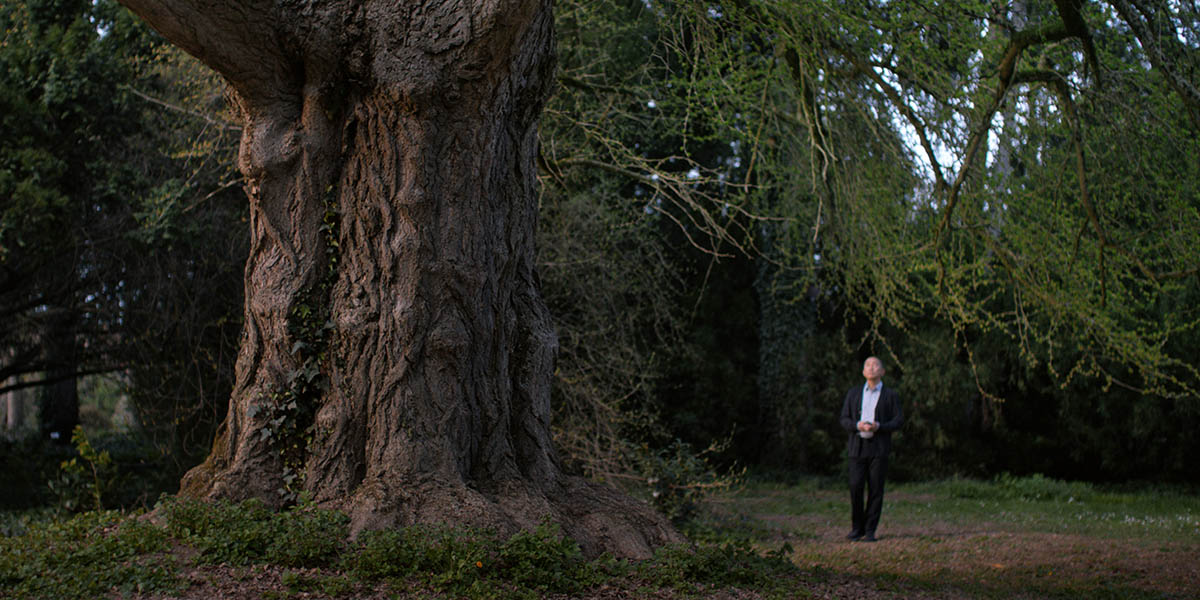
The 61st Chicago International Film Festival presented an exceptionally rich lineup of high-quality titles from around the world, including such important works as “The Secret Agent,” “The Mastermind” and “It Was Just an Accident.” However, if I had to choose just one favorite, I would have to choose “Silent friend.”
Ildiko Enyedi’s wildly ambitious and daring new film tells three stories intertwined in timelines spanning an entire century, each shot in a different format designed to evoke their respective eras. They share a common premise and each story involves scientific investigation, technological ambition and the deep connection between humans and plant life. This is especially evident with the large ginkgo located in a German botanical garden, which ends up becoming one of the most fascinating characters in the film.
In the first storyline, set in 1908 and shot in 35mm black-and-white, a young woman named Grete (Luna Wedler) is first seen applying to become the first science student at the University of Hamburg in Germany, facing a group of older professors who turn their interview with her about her knowledge of plant classifications into a frightening and mocking inquiry into her sex life.
It’s supposed to be a humiliation, but Grete holds on and is eventually admitted to the school. But soon after, she is kicked out of the room she is renting due to a misunderstanding. She then took a job as an assistant with a local photographer, which led her to develop an interest in botanical photography that would help her find her place in the world.
The next story, shot in grainy 16mm color, is set in 1972 and follows Hannes (Enzo Brumm), a straight-up literature student who feels out of place among his more privileged and openly revolutionary classmates. Soon he befriends Gundula (Marlene Brown), a botany student, and when she has to go on a trip, she entrusts him with the care of a geranium which is a key part of her studies, and the bond he gradually develops with it helps to illuminate his feelings for her.
In the latest story, shot digitally and set in 2020, visiting neuroscientist Tony (Tony Leung) finds his work studying the brainwaves of pre-verbal babies interrupted with the arrival of COVID and, with nothing else to do, he decides to shift his attention from infants to the aforementioned ginkgo in an attempt to exploit his past stories with the remote help of the French botanist Alice (Léa Seydoux) in experiments which arouses the suspicions of a security guard on the almost abandoned campus, who suspects that he is up to no good.
This may sound incredibly pretentious, I suppose, but I assure you it is anything but. It’s 147 minutes long and every single one of them is absolutely compelling. From a visual standpoint, it always provides a feast for the eyes, whether through the use of different shooting styles, the striking framing of many shots, or the colorful abstract images meant to represent the electrochemical life hidden inside this ginkgo tree. (This is one of those films that demands to be seen on the biggest and best screen possible.)
Dramatically, it’s just as strong because Enyedi takes the three plotlines, each of which is interesting enough to support its own characterization, and weaves them together in a way that allows each to inform the other and explore the central idea of humanity’s continuing relationship with nature without over-emphasizing the point or offering easy solutions. The performances, from old pros like Leung and Seydoux to newcomers like Wedler and that gingko, are compelling and bring a distinct and necessary human element to a story that could have become too much of an intellectual exercise in the wrong hands. “Silent Friend” is a true original, one of those cinematic events that, once seen, will not be easily forgotten.
In comparison, that of Maryam Touzani “Malaga Street” is a much more conventional and friendly piece of cinema, but ultimately proves equally effective. It centers on Maria Angeles (Carmen Maura), a middle-aged woman whose family fled Spain to Tangier to escape the Franco dictatorship. She lived her entire life in her adopted city, including the last twenty years as a widow.
His contentment is shattered when his only daughter, Clara (Marta Etruria), arrives from Madrid, who informs him that due to the financial impact of his recent divorce, the apartment, which is in Clara’s name, must be sold immediately. Maria Angeles can either move in with her daughter in Madrid or settle into a local retirement home. Refusing to leave the city she has known all her life, she opts for the latter.
Yet, as this unsurprisingly doesn’t work, she hatches a plot to essentially squat in his now vacant apartment, even managing to convince the antiques dealer (Ahmed Boulane) who bought all of her furniture to bring her stuff back to her, which eventually sparks an attempted romance between the two. This of course can’t last, but Maria Angeles is certainly doing its best, even turning the place into a temporary watering hole for locals to watch soccer games.
On the surface, the film is rather formal and inoffensive, the kind of thing where you can practically see the American remake in your mind’s eye even as you watch it. There aren’t many surprises in the script designed by Touzani and co-writer Nabil Ayouch, the conflict between Maria Angeles and Clara is schematically drawn, as is Maria Angeles’ friendship with a mute nun (Maria Alfonso Rosso), and the final moments attempt to tip into dramatic ambiguity that doesn’t fit particularly well with what came before.
But while it’s not particularly great, deep, or original, it’s still undeniably entertaining, and that’s almost entirely due to the presence of the legendary Maura in the central role. She is, of course, best known for her collaborations with Spanish auteur Pedro Almodóvar, including such favorites as “The Law of Desire,” “Women on the Verge of a Nervous Breakdown” and “Volver.”
This film isn’t as ambitious as those, but as a vehicle for Maura’s still considerable star quality, it works. She’s on screen for virtually the entire film and serves as a charming center, gently but firmly dominating the proceedings and transforming an otherwise familiar project into an undeniable audience pleaser.
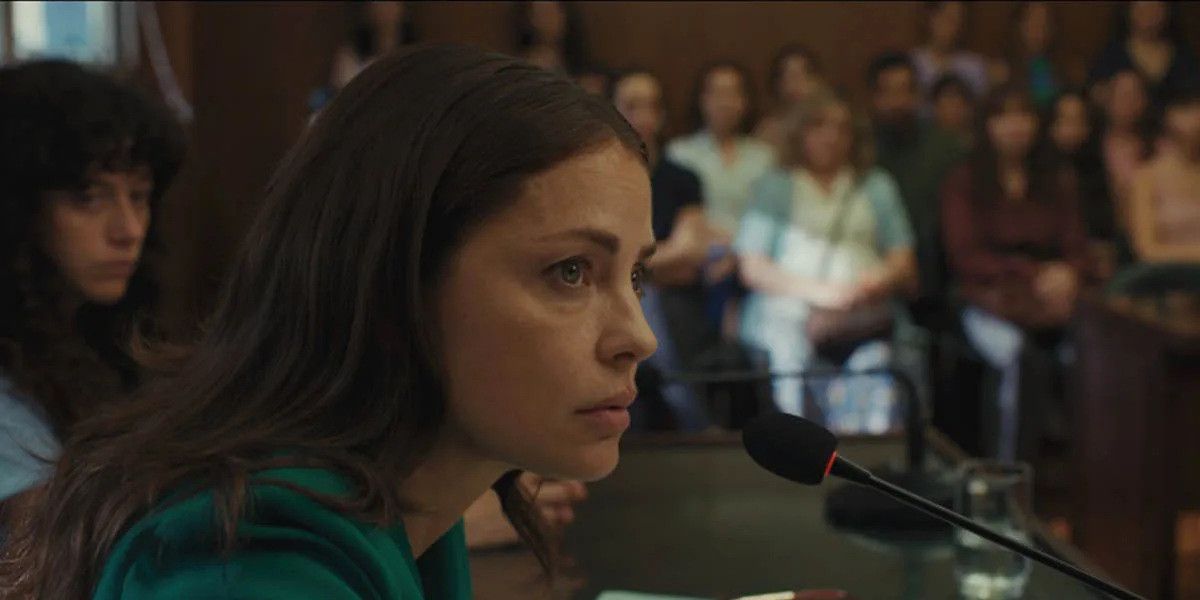
Argentine cinema “Belen” from director Dolores Fonzi, also offers viewers a relatively familiar narrative, albeit of a much darker and angry nature. Based on a true story, the film begins in 2014 as a young woman (Camilla Plaate) is brought to the hospital by her mother, suffering from abdominal pain. After a quick examination, she goes to the bathroom. When she returns, she bleeds profusely from what turns out to be the miscarriage of a fetus she didn’t even know she was carrying. She is handcuffed to her bed and arrested for murder – abortion was still illegal in Argentina and she was believed to have done this to herself.
After spending two years in prison, she was tried and, following a superficial defense by a court-appointed lawyer who seemed to care little, she was sentenced to eight years in prison for the crime of “aggravated homicide by reason of kinship”. Another lawyer, Soledad Deza (played by Fonzi herself), hears about the case, is rightly outraged by what she learns, and is determined to obtain justice for her client, who is now nicknamed “Belén” to protect her and her family’s privacy, overcoming many personal and professional obstacles in her efforts and helping to inspire a grassroots feminist protest movement along the way.
The opening sequence, chronicling the woman’s nightmarish visit to the hospital that sees her arrive as a patient and leave as a prisoner, is undeniably gripping and enraging. However, once she is convicted, the film focuses on Deza and her attempts to fight bureaucracy and hostile forces to make the world aware of her client’s plight, hoping to free her after an appeal. This stuff is handled pretty well, I suppose, but Fonzi never really finds an approach to the material that makes it stand out from many other films about a person going up against the system.
Once the focus shifts to Deza and her efforts, Belén is sidelined, and we don’t really get a sense of how she feels about the massive injustice done to her. The film conveys a palpable sense of anger and frustration at the ease with which the basic rights of roughly half the planet’s population can be neglected or ignored, depending on who is in charge and who is paying attention.
Upcoming Movie Update
Berita Olahraga
News
Berita Terkini
Berita Terbaru
Berita Teknologi
Seputar Teknologi
Drama Korea
Resep Masakan
Pendidikan
Berita Terbaru
Berita Terbaru
Berita Terbaru