CIFF 2025: The beauty of the donkey, the eyes of Ghana, under the clouds | Festivals and awards

The documentary is a cinematographic approach intrinsically designed for memory. In fact, it is the approach that most aligns with photography and the desire to capture a moment, person or thing before the forces of time take it away and erase its existence. So, you know, usually with these films, you’re going to tackle a topic of some importance. The three films in this dispatch from the Chicago International Film Festival take the form’s capacity to heart in an effort to preserve the memories of a village in Kosovo, the legacy of a disgraced Ghanaian president, and a region of Italy previously wiped out by a volcano. These films, with varying degrees of success, demonstrate the importance of memory, even when memories hurt.
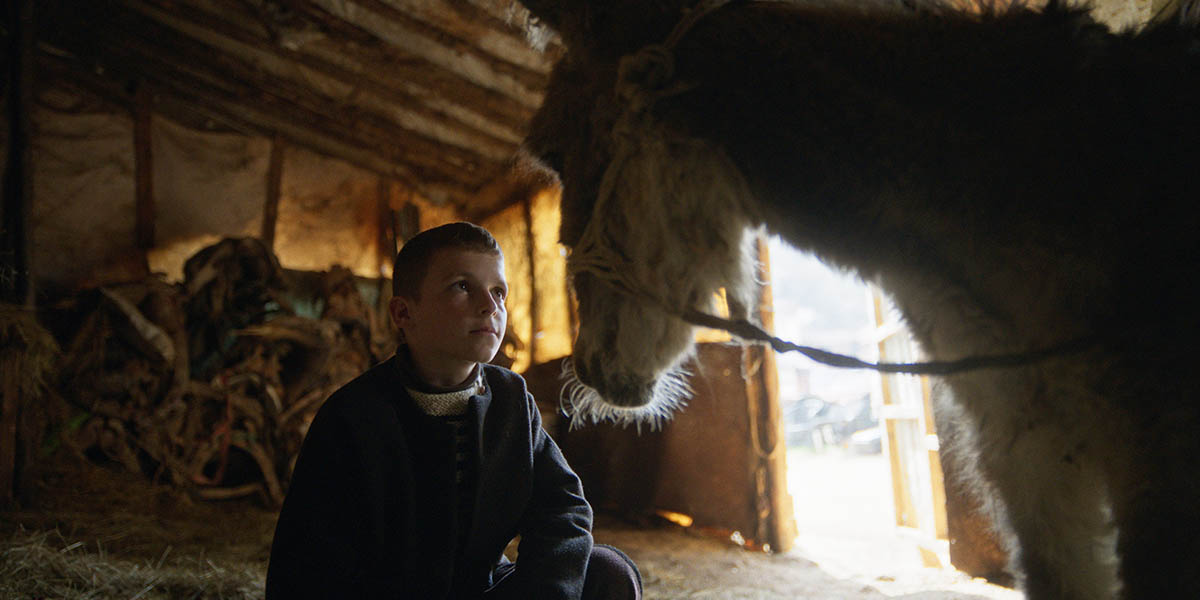
For about a year, cinema has been flooded with films about unanchored individuals and shaken communities struggling with the loss of their homeland. The elegiac documentary by Swiss-Albanian director Dea Gjinovci “The beauty of the donkey” is a nice addition to this trend. It is about the filmmaker’s father, who, with his daughter, returns to their small village in Kosovo for the first time in almost 60 years. There, her father, Asllan, shares memories that Gjinovci decides to stage in the form of abstract theatrical productions, bringing the past into modernity with power.
It’s also a film that mixes politics and loss. In 1968, 19-year-old Asllan was a political activist when he was exiled. By leaving the country, he lost contact with his family, especially his mother, whose death has always been part of the family tradition. Asllan shares with astonishing clarity the oppression his family suffered under Serbian authorities and the risks taken to fight their regime; he also investigates his mother’s death with equal fervor. Of course, these family stories also have an impact on Gjinovci. Because she grew up in Switzerland, she never saw her father’s native country. In the opening sequence, when Asllan emerges from the woods, heading toward the field where his stone house once stood, in assurance of his purpose, you can feel Gjinovci’s haunting reverence for that moment.
Despite the film’s fanciful title, there aren’t many donkeys in this picture. Two scenes featuring donkeys bookend the work, and while you can certainly feel how the animal harkens back to a moment of innocence in Asllan’s life and serves as a reminder of his own endurance, the moments aren’t cohesive enough to constitute the film’s central thread. Instead, the film is strongest when it doesn’t give way to two metaphorical scenes, but focuses on the cathartic reappropriation of its story.
I really wish director Ben Proudfoot a messy historical documentary”The eyes of Ghana“, a partial product of executive producers Michelle and Barack Obama’s Higher Ground Productions, was better. It’s one of those films whose desire to tell a little-known story gives it some breathing room, but whose shaky execution quickly evaporates much of the goodwill you went in with. The film concerns legendary Ghanaian cinematographer and director Chris Hesse’s desire to reclaim more than a thousand boxes of footage of London that he shot from the country’s first film. President Kwame Nkrumah before the leader’s fall following a military coup in 1966. While this story alone would make for an incredible documentary, Proudfoot overpacks “The Eyes of Ghana” with far too many other threads for it all to hold together.
Proudfoot is a two-time winner of the Academy Award for Best Documentary Short (“The Last Repair,” “The Queen of Basketball”), a background that can unfortunately be felt when “The Eyes of Ghana” begins with the three cold opens. The first opener introduces Hesse; the second produces his protégé, director Anita Afonu; the third involves the steadfast projectionist of Ghana’s Rex Cinema, Addo, who often dreams of re-showing a film in the disused cinema hall. With this setup, you can pretty much guess where this movie will end up. However, Proudfoot does not weave these threads perfectly. He keeps changing the subject, telling us about the beginnings of Ghanaian cinema, the troubled history of Nkrumah, and how America disrupted the Pan-African movement by destabilizing newly independent governments. Rather than creating a cohesive feature film from these varied subjects, Proudfoot has unfortunately produced several short films whose total composition lacks the focus as a feature film.
His film is further hampered when it begins to include the digitized and restored pieces that Hesse shot (in a sense, “The Eyes of Ghana” is a well-intentioned advertisement for additional funds to restore the rest of Hesse’s stored footage). Not because the images aren’t exceptional, because Hesse’s films are much better than the film we’re watching, which relies on screaming Disney-style music from Kris Bowers and an immediate desire to capture Hesse from such an angle that we’re always looking deeply into his eyes. Although Proudfoot clearly appreciates the material — “Rwanda and Juliet,” his only other feature, focusing on life in that African country after the genocide — this film is too artful and broad for such a sensitive story.
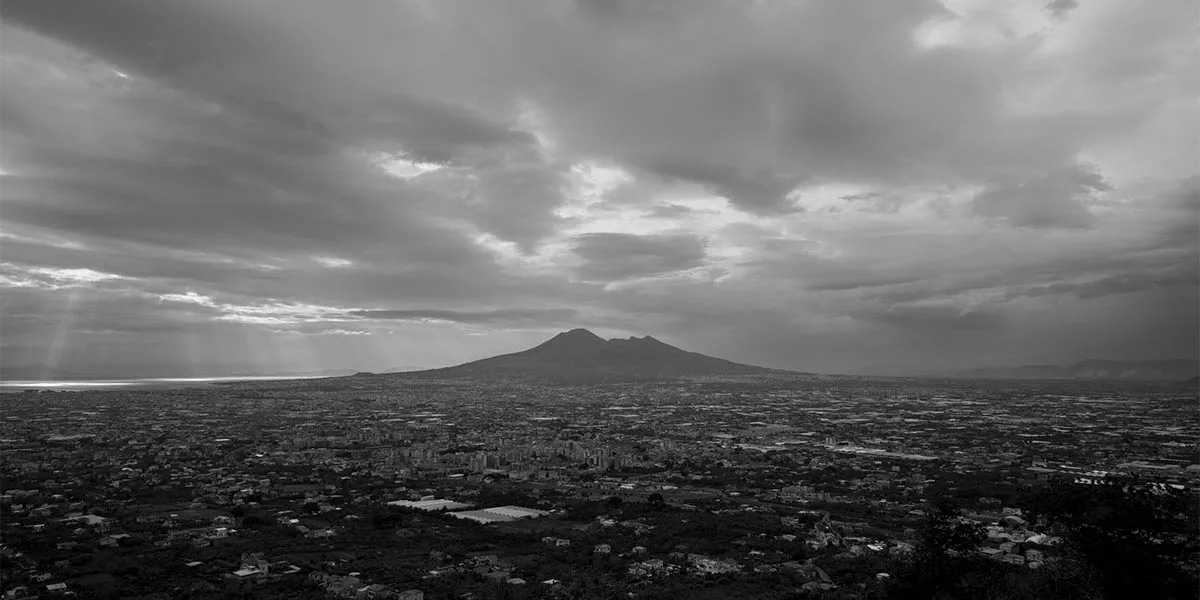
The story of Mount Vesuvius, whose eruption led to the decimation of Pompeii, served as a shot that continues to reverberate around the world. So when Gianfranco Rosi’s magnificent black and white documentary “Under the clouds“Fixing its lens on the mountain, one immediately expects his film to hyperfocus on this looming threat. But Rosi, whose previous films include overtly political works like “Fire at Sea” and “Notturno,” rarely pays attention to life inside the volcano. He instead meanders through the ordinary life bustling around Naples and the recording of long-gone lives by the archaeologists excavating local historic sites.
“Below the Clouds” is not a talky documentary per se. It’s totally observational. Despite this, Rosi’s meditative lens takes note of the chatter emanating from its many places. There is the emergency call center where people call for help after every tremor. Although one might think that these are intense communications, their inherent frenzy is softened by the humor and gentleness of the officials who answer these calls. Syrian boatmen seeking to enter the port for their Ukrainian grain are more talkative. And we talk even more when we talk about the work done by archaeologists, who sometimes explore vast tunnels and excavated caverns containing the frozen and calcified victims of Pompeii.
Together, all these scenes form a documentary fascinated by the fragility and suspension of life. Rhythmic editing, for example, creates a circular pattern, returning and remixing images whose continued convergence gives great meaning to these mundane images. Rosi also ventures into a movie theater, where he plays films like “The Last Days of Pompeii” (1913) and “Journey to Italy” (1954), which speak to the long-standing cultural fascination with an event that continues to fascinate outsiders and remains ever present in the minds of those who live near the famous volcano. In a sense, by enclosing his contemporary documentary in this rich black and white photography, Rosi has also inscribed his film in this rich photography. In this way, we preserve the artifacts of memory that make this place our home.
Upcoming Movie Update
Berita Olahraga
News
Berita Terkini
Berita Terbaru
Berita Teknologi
Seputar Teknologi
Drama Korea
Resep Masakan
Pendidikan
Berita Terbaru
Berita Terbaru
Berita Terbaru