CIFF 2025: A golden summer, before the call, adult children, God only knows | Festivals and awards

For the 61st Chicago International Film Festival (CIFF), programming focused on what it does best: presenting a diverse and compelling variety of films. With the tagline “Find You Genre,” audiences of all niches are welcome and can tap into something familiar or try their hand at something new. This year, with the “City/State” program, CIFF presents local stories. Each film under the umbrella tackles entirely different themes, but in true Chicago fashion, they all stay true to the complexity cultivated in this city.
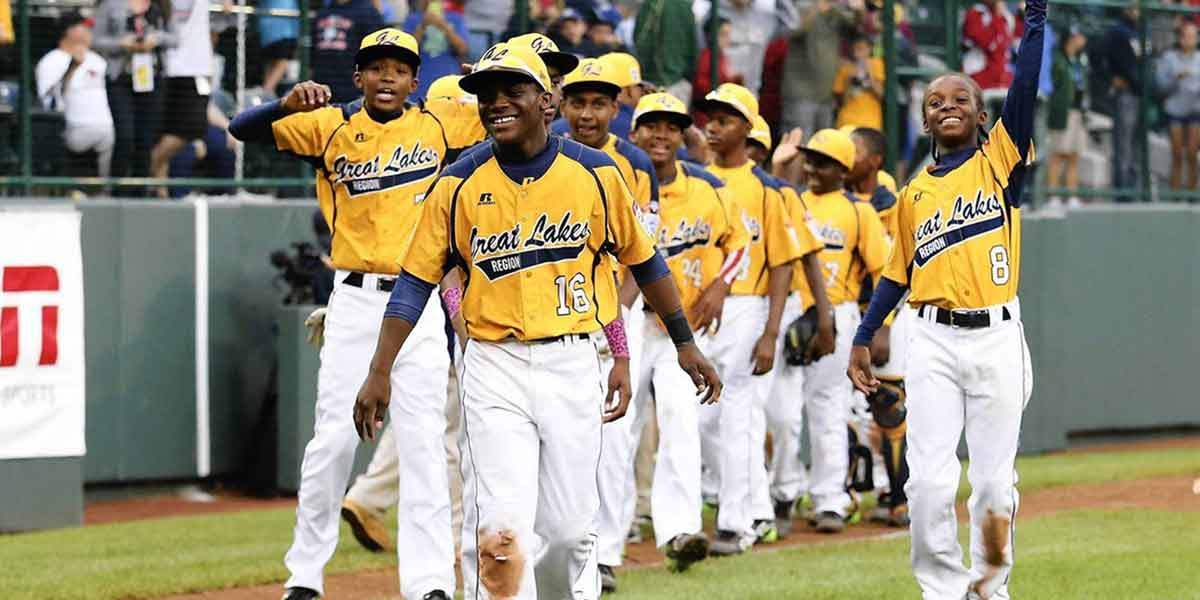
“A golden summer” takes us back to simpler times, when Chicago collectively rejoiced around the winning Jackie Robinson West (JRW) Little League team on Chicago’s South Side, the first all-black team to come together in the late summer tournament. Like any child, the only story that interested me at that time was the batter count and the runs scored. Despite its overall positive lighting, we see the shadows more clearly in this production. “One Golden Summer” is not a nostalgic image; it is a correction of a national narrative that honors the integrity of children, now adults, and the legacy of a community.
Director Kevin Shaw balances present-day interviews with archival television footage to create a narrative of what happened, while also giving us a glimpse of what’s going on behind the curtain. The only questionable choice in the story concerns the off-putting AI-generated animations; this decision, mercifully brief, seems at odds with the overall authenticity the filmmakers seek to elevate. However, with each triumph, with each victory that brings us closer to the culminating championship, we know that black joy is very rarely widely accepted. The documentary’s ability to evoke all the ups and downs makes us feel like we’re reliving that summer and fall of 2014.
Shaw excels at rewriting the storyline for JRW’s teammates. While acknowledging their pain and sensitivities that still exist today, it also highlights their growth and resilience. To this day, Josh Houston and his teammates struggle to recount the details of the revocation of their Champion title. Shaw smartly includes an interview with Mo’ne Davis, another star of the 2014 Little League World Series; more than 10 years later, even she strongly supports the JRW team receiving recognition within the museum and archives. Still, the film leaves us full of hope, the feeling that no matter what happens, the people of Chicago will always know the real story, no matter how much national negativity is spewed at us.
Chicago creator James Choi’s new film, while short and sweet, is a sentimental snapshot of a soldier’s days leading up to his departure for duty. “Before the call” follows Jinwoo (Andy Koh), a Korean American who returns to Korea to serve in the military amid a growing political crisis. Although he is not required to enlist, Jinwoo seems to feel some guilt for not participating in the cultural norm, something his father also did.
The film is segmented by letters, a unique way of slowing down the viewing experience while explicitly sharing its characters’ inner thoughts. The most visually stunning and jaw-dropping moments are paired with chilling and earth-shattering sound design; we too feel conflicted by the decision Jinwoo makes. This inner conflict between heart and mind is further complicated by the desire to honor and fulfill a duty to internal and external forces.
As the days pass and Jinwoo’s deployment encroaches, time spent with his friends and father continues to add stones to either side of the ladder. While enjoying a meal with her friend, Minji suggests a popular new activity taking over Seoul called “dying happy,” where one attends a version of one’s own funeral to be reborn and start again. By introducing this idea of rebirth or a new roster, we almost want to capture this concept as a form of closure for Jinwoo’s next journey. Yet existentialism persists; “whose war is this”, really?
“Before the Call” is not intended to give us the answers; it’s about navigating ambiguity as the world continues to make no sense. Choi fires beautifully on all cylinders to create a timely and pivotal film that can be told across cultures.
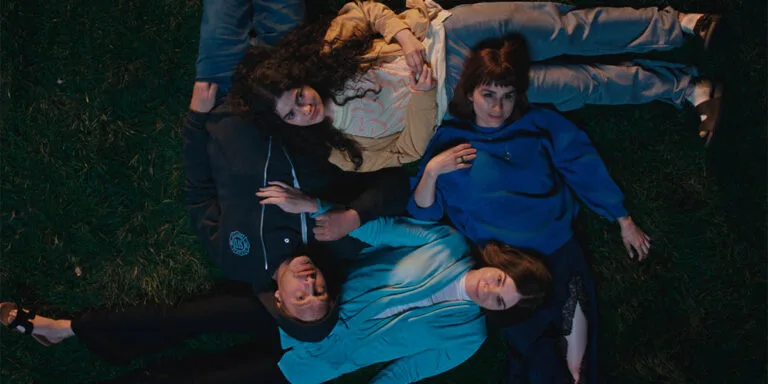
“Adult children” a non-traditional family drama directed by Rich Newey and written by his life partner, Annika Marks, is a multi-threaded story told through the eyes of a rising high school student. At first, “Adult Children” borders a little too much on the cliché as the story’s central character, 17-year-old Morgan (Ella Rubin), fails to come up with anything of substance for her college essay. After noticing this lack of originality, the complex characters enter the scene and each of their unraveling threads is rewoven through their brotherly bonds.
The story picks up when Morgan’s (considerably) older brother, Josh (Thomas Sadoski), relapses and must return to his mother’s home for temporary recovery before heading to a treatment center. This sends the whole family into a frenzy, particularly because of the timing; it’s just as Morgan and his parents are preparing to embark on a long vacation to Europe. While Morgan’s two older sisters, Lisa (Betsy Brandt) and Dahlia (Aya Cash), also return home to support their brother, Morgan’s fear of missing out drives her to stay behind to bond with the siblings she never really grew up with.
With Marks inserting his experiential knowledge into plot points, every awkward encounter and sibling interaction feels raw and honest. Although the script has some weak moments, born from trying a little too hard to be funny or profound, the chemistry between the characters and the standout performances balance out the cringeworthy moments. Unfortunately, the film’s music parallels the writing, making it particularly cheesy; every needle drop feels like an out-of-touch stepdad taking over while dropping you and your friends off at the mall in 2008.
The heavier thematic thread of what it means to be near a loved one struggling with addiction is not overshadowed at all; this saves the point of the story while complementing the other smaller plots. Although the film falters on several technical elements, I still found myself laughing at its quirks and connecting with the depiction of siblings who essentially grew up with different parents due to a significant age gap.
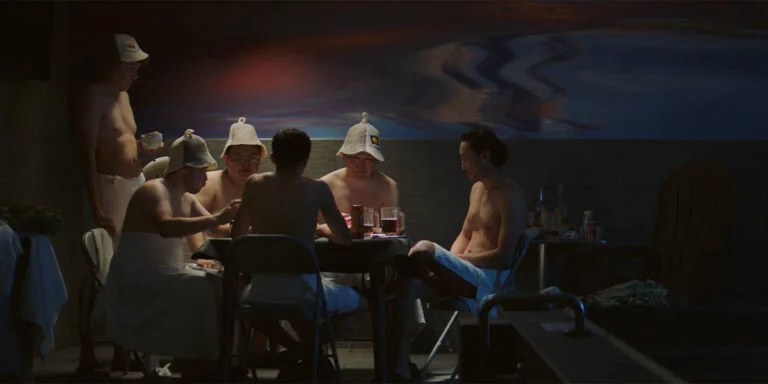
Documentary filmmaker Nurzhamal Karamoldoeva transformed her lens by viewing and directing a narrative feature film. “Only God knows” is a slice of life set in Chicago, or perhaps a series of unfortunate events. We deal him a bad hand and we go all in, while risking for a little sweetness of life.
The film opens with Eric (Dauren Tashkenbaev), a Kyrgyz migrant, at prayer time, before we see him calling a colleague for a quick loan. With his smug look, it’s clear there’s no intention of paying back; a clear juxtaposition with his religious morality. We quickly learn the goal he uses to justify these means: he is determined to become a citizen and buy a house for his mother and his wife, Mira (Malika Kanatova).
Currently living in such close quarters, there is an off-putting tension between the trio. Eric “works” all the time, taking him away from home; her mother thinks Mira isn’t doing enough. Everyone seems to be harboring a seismic secret, but we hope the light prevails. As Eric takes on one too many people again and again, his family soon drowns due to his gambling addiction.
“Only Heaven Knows” relentlessly layers one big problem after another, and there is no perfect player. Mira is doing some damage herself, but she too is just looking for a better life in a new place. Both Eric and Mira are distracted when it comes to thinking about others. It causes financial stress (which leads to threatened security); she’s having an affair in the only sense of community she has, Chicago. Every character is so strongly written and well-acted; despite the double downward spiral, we understand. At the very least, we sympathize.
Karamoldoeva’s vision and direction is so precise; it is evident that his background has provided a solid foundation for nuanced, complex and compassionate depictions of real and unique Chicago demographics. Ulan Moldousupov’s melancholy score looms and lingers; the blue-green hue of dawn or dusk fills the air and washes every plane. Poignantly, there is less prayer as the disorder grows. Assimilating to being American certainly, always, comes with significant expense.
Upcoming Movie Update
Berita Olahraga
News
Berita Terkini
Berita Terbaru
Berita Teknologi
Seputar Teknologi
Drama Korea
Resep Masakan
Pendidikan
Berita Terbaru
Berita Terbaru
Berita Terbaru