Focus on short films: “Stooper” (with Bennett Watanabe) | Short films in brief

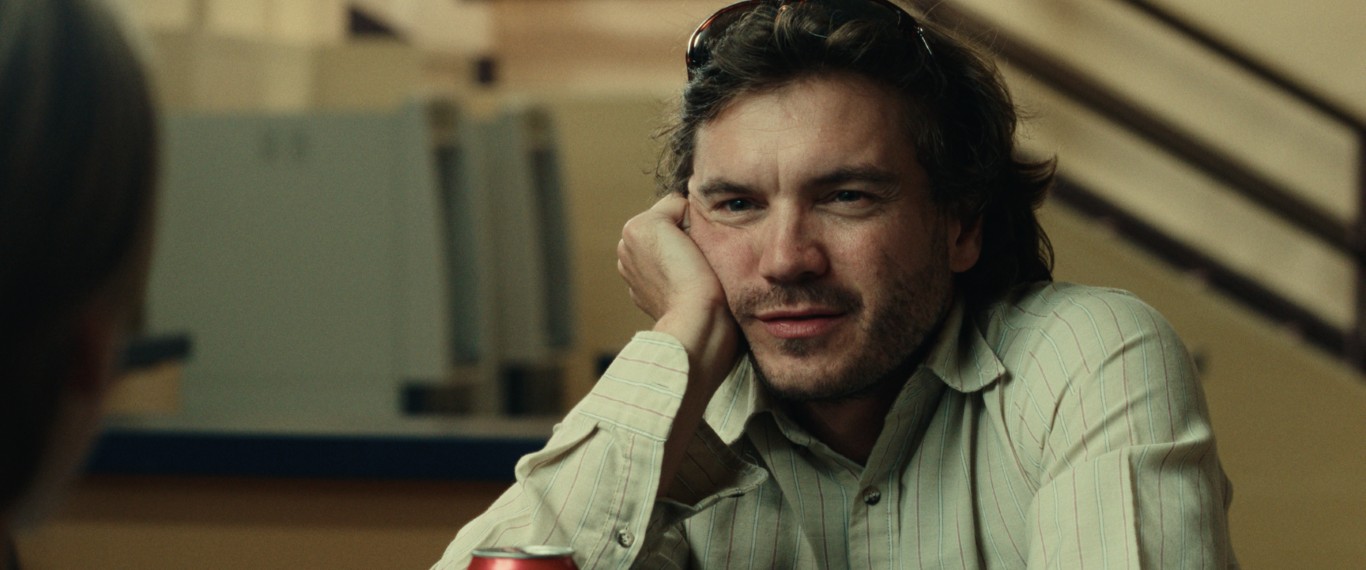
“Stooper” by Bennett Watanabe tells the story of a boy (Valor Hirsch) on his tenth birthday. Presumably his mother is at work (or somewhere) while he waits for his father (Emile Hirsch, Valor’s real father) to pick him up during his weekend with him. The boy receives a $10 bill in one of the many birthday cards he opens on his dining room table and adds it to a small pile of money he keeps under his bed. We later find out he’s been saving up for a nice bike. His father comes to pick him up without any plans for the boy who will be celebrating his tenth birthday, but timidly suggests going to the racetrack.
The majority of “Stooper” takes place on the track where the boy’s father asks him, “Who do you like in the second?” making sure the boy understands that it’s not who you “want”, but who you “love”? There’s something about Captain Midnight that captures the boy’s interest. The father explains the “odds” and that Captain Midnight is a bad bet (10-1). The boy insists. It’s his money, he can do what he wants with it. Captain Midnight, it is. From there, the boy and his father fall into the trap that is the story of many gambling addicts, and we begin to wonder if these two wouldn’t be better off if they lost everything.
Something about “Stooper” reminded me of Richard Linklater’s “Boyhood,” where again the father has his son over for the weekend and maybe doesn’t always make the best choices about where to go and what to do, and the boy surprises him with how wise and thoughtful he can be when it comes to real-life issues. Of course, Emile Hirsch’s character doesn’t want to hear about what he and his son should do with their money, even though we know full well that the boy is right. We stay with them on this journey to see who will make the smarter choice and who will ultimately prevail.
Watanabe knows how to create suspense that lasts throughout the film without compromising the most important aspects of the story. Of course, it’s not about whether or not they will come home with a big bag of winnings, but whether or not the boy will truly be able to look up to his father as a role model. Watanabe is smart to not emphasize this point with a confrontation between the two, but with a final moment that will stay in their lives forever. The boy may not respect his father, but he can help him. The father is too desperate to see the big picture of what he is trying to do with his own son.
“Stooper” is a terrific father-son story with two exceptional performances at its center. Casting a real-life father-son duo, especially one as strong as this one, may make this a more interesting curiosity, but maybe there’s something going on between the two here that we’re not privy to. Emile Hirsch has always been an excellent actor with a great career. Maybe he’s trying to tell Valor, who shows great promise with this first role, to be careful how you handle success. You can lose it without even knowing it.
Q&A with director Bennett Watanabe
How did this story come about?
I’ve wanted to do something at a racetrack for years. It was always a fascinating place to explore in a short film. After brainstorming some story ideas, I remembered a photo I took some time ago of a young child kicking a ball at a racetrack while his father watched the horses. And that kind of sparked the father-son story.
Tell me about the casting. Did you already know Emile and Valor Hirsch?
I didn’t know Emile personally before “Stooper”, but I’ve been a big fan of his work for a long time. “Lords of Dogtown” was a fundamental part of my childhood, growing up skating and surfing at Venice Beach. So when we started thinking about casting, he was our dream choice. And then I saw a photo on his Instagram of Emile and Valor, where Emile was wearing a funny “Once Upon A Time in… Hollywood” T-shirt. And they were just perfect to play these roles. One of our producers, Eliel Ford, was able to find Emile’s information through a friend, and we sent him the script. He responded well to the material. This led to a meeting with Emile and Valor, and a few months later we were at Santa Anita Park shooting our little film.
This is the first Valor film. Can you tell me what it was like for him to play alongside his father for the first time?
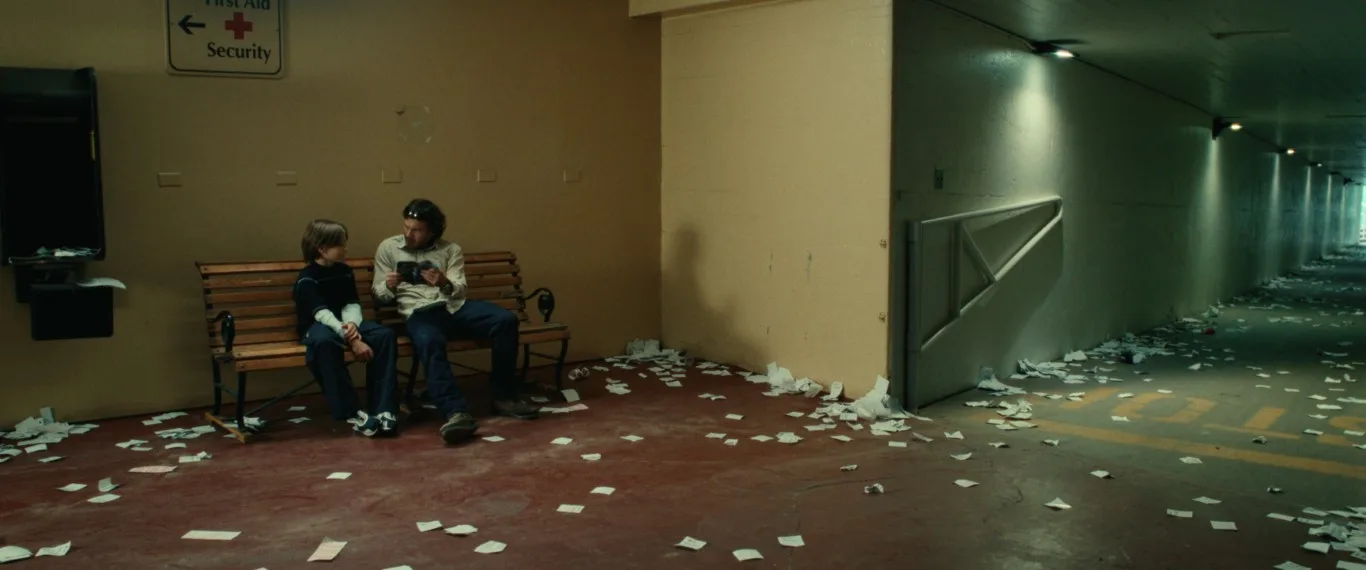
I think he had a lot of fun doing it. I mean, it must be really fun to be allowed to yell at your dad without any repercussions, right? But it definitely helped Val a lot to have his dad around to show him the ropes and make him feel comfortable on set. They rehearsed a lot and we all spent time together working on the characters and the lines, so it was really organic for Val. Before we went into production, the three of us went to the track on a sort of research trip. But it quickly turned into a bet on horses. Valor ended up entering three or four races in a row purely by choosing horse names he found funny. And he won a few hundred dollars. Talk about life imitating art!
Do you have a lot of experience in the world of horse racing and racetrack betting?
Yes, I really got interested in race tracks when I was a teenager just from watching older movies like “Let It Ride”, “California Split” and “The Killing”. And then in college, while living in New York, I would take the subway to Queens and visit the Aqueduct Racetrack. I never had much luck betting, but it was a fascinating place to people watch. You sit there for hours watching every type of human emotion played out in public. It’s endlessly entertaining.
It seems like there could have been multiple possible endings. Have there been other versions where the ending was different?
For a long time, we had the most trope-y, expected ending you could get out of a gambling movie. But then I got some feedback from a writer friend that kind of pushed me to think a little more outside the box. And then one day, as I was walking around the house, the ending as it stands now sort of dawned on me. It was good to give a glimmer of hope to this father-son relationship. It also added another layer of meaning to the title, “Stooper.” A stooper is a type of gambler who walks around a racetrack sifting through discarded tickets looking for a forgotten winner.
What’s next for you?
We’re working on creating a feature-length version of “Stooper”, but with a tonal shift to something much more gonzo than the short. And then I plunged into the phase of writing a period article on the promotion of boxing.
Upcoming Movie Update
Berita Olahraga
News
Berita Terkini
Berita Terbaru
Berita Teknologi
Seputar Teknologi
Drama Korea
Resep Masakan
Pendidikan
Berita Terbaru
Berita Terbaru
Berita Terbaru