Swan song: Udo Kier (1944-2025) | Tributes

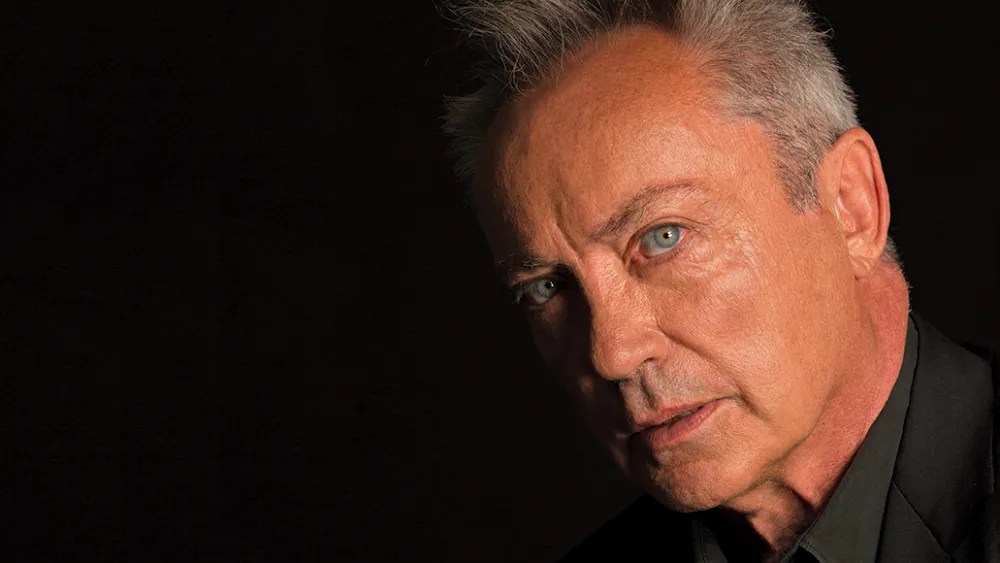
“Beware!” Udo Kier shouts at Madonna in German from behind the camera in the opening seconds of his music video for her 1992 song “Deeper and Deeper,” his dark eyes staring wide into an onyx abyss, dispensing almost philosophical wisdom behind a pop sheen. “Our idols and demons will pursue us until we learn to let them go!” »
This dichotomy will follow Kier through a long career almost staggering in its prolificacy – nearly 250 roles in a variety of mediums, from film and television to theater and video games. And with his death last Sunday at the age of 81 (a good long career that seems much too soon), he leaves behind a body of work that touches on queer, camp, arthouse and mainstream. He was a weirdo who managed to expose his weirdness to the public in a way that, because of his prodigious output, they could hardly escape. But it was so compelling that we never wanted to look away.
Kier’s birth story resembles one of his photos, at least in part because the Nazis were involved: Just moments after his birth in October 1944, the hospital where he was born was bombed by the Allies; he and his mother had to be rescued from the rubble. (His father had left the family long before Udo was born.) As a teenager, he frequented “popular” bars with future director Reiner Werner Fassbinder; together, the two men drank sodas and made fun of the customers, many of whom were queer or trans. (Kier would be openly gay for most of his life.)
He moved to London at the age of 18 to learn English for an office job and had no aspirations of becoming an actor. But his elfin face and expressive eyes nonetheless turned heads, and he would find himself discovered and cast in the 1966 film “Road to Saint Tropez.” But his real breakthrough would come from a fateful meeting with Andy Warhol collaborator Paul Morrissey on a plane, who was so struck by his looks that he immediately cast him in the title role of 1973’s “Flesh for Frankenstein,” and later in “Blood for Dracula” from 1974. These works position Kier as decidedly ribald and transgressive forms of classic horror figures: his almost sexually devoted Frankenstein solely to his science, his Count Dracula the height of sexual frustration as he tries in vain to find virgin blood for his appetites. “The blood of these whores is killing me!”
In these early roles, Kier’s phenotype would be firmly established: The opening credits of “Dracula” show us a close-up of Kier’s young, handsome face, his piercing green eyes just off-screen as the camera studies his high cheekbones. Morrissey told him he had to lose ten pounds in a week for the role; Kier starved himself so much, eating only salad leaves, that he spent much of the film in a wheelchair. Yet all its beauty and ferocity remain; Vittorio de Sica’s Marchese di Fiori raves that Dracula’s name is a perfect blend of “East and West,” but it could just as easily be talking about Kier’s exotic characteristics.
From there, Kier’s star rose and he found success in films like “Suspiria” before launching a long-running collaboration with Lars Von Trier; his first appearance of many was a cameo as himself in “Epidemic”, where he told the real story of his birth in one of the film’s most gripping sequences. (He would later appear in virtually all of Von Trier’s films, from “Melancholia” to “Nymphomanic” to “The House That Jack Built.”)
Kier enjoyed building deep and lasting relationships with renowned filmmakers, which at least partly explains his strong filmography. His move from European arthouse fare to the United States came with Gus Van Sant, who gave him the small but crucial role of Hans, an older brand of River Phoenix and Keanu Reeves’ hustlers; his remarkable scene, where he re-enacts an old German theater number with a lamp in a hotel room, feels like a cry of joy and activity in the lonely world of the film.
From there, its unique arthouse face in Europe would be displayed on mainstream Hollywood blockbusters like “Ace Ventura: Pet Detective,” “Blade” and “Armageddon.” Often he played scientists, Nazis, and other kinds of deeply German weirdos. Half the time he was a vampire. But its eccentricity, its theatricality have never been canceled by the notoriety of these productions; either these filmmakers knew exactly how much Udo to sprinkle into their four-quadrant fare, or he knew how to maintain his singular image in these artistically less unbridled productions.
In doing so, Kier built his own little island of cult stardom: audiences who knew how to find him swam to the bottom of his hundreds of works, and those who didn’t were still able to be surprised by a glimpse of his intense, haunting face. Even in the realm of video games, he went weird: like Yuri in “Command & Conquer: Red Alert,” he cut an odd figure with his dark brown goatee and stylized forehead tattoo, flanked by a metal headband that cemented his sci-fi look. (His face, as alien as it was, still suited the futurist; see “Johnny Mnemonic” or his role as a space-traveling Nazi in “Iron Sky.”)
There has always been something seductive about Udo, playing on his own real-life queerness to navigate the queer lenses of European and American cinema. More than many other queer actors of the era, Kier delighted in his theatricality, the eroticism of his early work translating into a distinctly sensual energy that made you feel like he was just as likely to seduce you as kill you, regardless of your gender. It made sense that he had played vampires so many times; vampires have always acted as symbols for the abject, the homosexual, the outsiders. Kier has turned his perceived strangeness into a superpower, one that could also threaten to free you from your own social prisons.

Despite decades as a solid supporting player, Kier never really got the showcase he probably deserved. That is, until 2021’s “Swan Song” (no, not that one), the low-budget queer comedy-drama about the real Pat Pitsenbarger, the “Liberace of Sandusky, Ohio.” As Pat, Kier is haughty, sensitive, weary of a life where his open weirdness has cost him dearly – including his lover, who died of AIDS without leaving a will, offering Pat nothing from their decades-long relationship. Here, he gets the chance to command scenes in a way he never could before, poking fun and feeling his way through a psychological reckoning of his lonely, queer life.
In one scene, he imagines a conversation with a deceased friend as they watch a young gay couple play happily with their child in the park. “I’ll never know how to be gay like that,” he laments, pouting in his lime green pantsuit. But in an age where homosexuality in cinema is a little more accepted (or, at least, assimilated), Kier’s pride in embracing his homosexuality as a outsidewhether as a mad scientist, a lone hustler, or even a vampire, makes him feel like a pioneer.
It’s strange to mourn the work we never got from an actor who’s been working for over 60 years. But even this year, we received excellent work from him in “The Secret Agent” and the promise of a collaboration with gaming titan Hideo Kojima for his motion-capture horror game, “OD.” Van Sant and Von Trier and many of his collaborators are still there (including S. Craig Zahler, who used it in “Brawl in Cell Block 99” and “Dragged Across Concrete”). He was always willing to pick up the phone and work, even if it was just to play Adolf Hitler….Again. He refuses to let his idols and demons pursue him, but rather than let them go, he has embraced them. And he’s made a career out of it as one of cinema’s most fascinating faces.
In an interview with The guardianKier once said: “When I have a role that isn’t the lead role, I want to act in a way that people remember.” »
“Otherwise, what’s the point?”
Upcoming Movie Update
Berita Olahraga
News
Berita Terkini
Berita Terbaru
Berita Teknologi
Seputar Teknologi
Drama Korea
Resep Masakan
Pendidikan
Berita Terbaru
Berita Terbaru
Berita Terbaru