Tokyo Film Festival 2025: “Mother Bhumi”, “Morte Cucina”, “We are the fruits of the first”, “Tunnels: the sun in the dark” | Festivals and awards


In my first dispatch from the 2025 Tokyo International Film Festival, “Journey into Sato Tadao” director Terasaki Mizuho describes films as “greetings,” small friendly gestures that introduce the world to something essential about a place and its people. Greetings are exchanged whenever travelers from different countries come together, and the spirit of presentation was very much present at Tokyo’s TIFF (unlike the Toronto version) this year.
New Japanese films make up the core of the festival’s lineup: Films sold out before I could get a ticket, but this year TIFF hosted the premiere of “Tokyo Taxi,” the new film by prolific 94-year-old master filmmaker Yoji Yamada; the opening night selection, the feel-good drama “Climbing for Life,” was also a national film. My two favorite films in Tokyo this year were both Japanese productions, which we’ll talk about in my next post. But the festival’s approach to selecting Asian cinema alone is worth the detour.
TIFF’s “Asia Now” section, which highlights directors with three or fewer feature films in production, covers a geographic area stretching from Turkey to Japan, more than 8,000 kilometers (5,000+ miles) in total. The broader sections of the festival are also geared toward pan-Asian cinema, with a sprinkling of North American and European titles mixed in. It’s the opposite of what I typically experience at North American film festivals, and it’s refreshing to experience film curation from a perspective that doesn’t focus on America, especially at a time when I, personally, am not proud to be American.
This year, Southeast Asian cinema was particularly present in Tokyo, with three films from the region appearing in the main competition programme. The first of them, “Mother Bhumi” screened on opening night, in a large concert hall (located, like so many places in Japan, on the top floor of a shopping mall) where hundreds of fans came to see Chinese star Fan Bingbing in what was billed as a transformative role. And indeed, if you didn’t know she was the star of the film, it might be a while before you recognize the “X-Men: Days of Future Past” actress delivering a totally deglammed and extremely committed performance in this film.
Fan plays Hong Im, a respected healer and unofficial leader of a Malaysian Chinese community in the verdant Bujang Valley. The region is a melting pot of religions, languages, and ethnicities, and peace between them is tested early in the story. “Mother Bhumi” is set in the 1990s, a time when land re-appropriated by the British was being returned to its original owners by the Malaysian government; Through her connection with a local official, Hong has made herself an advocate for ethnic Chinese landowners who face losing their properties under the new law. His mission has an air of tragedy and futility. But what exactly is Hong protecting? And why?
This character beat remains unexplored and has faded by the time the story takes a dramatic turn toward Southeast Asian black magic practices in its third act. Local audiences could benefit more from political nuances. Yet director Chong Keat Aun’s understated, highly symbolic approach to storytelling – both vague and insidious – means that, for international viewers, the main appeal here is the craft.
The direction and cinematography of “Mother Bhumi” are stunning, favoring long, wide, lingering shots composed with an eye for the movement of objects in the frame. Midway through, Chong and cinematographer Leung Ming Kai pan the camera across the body of a woman in the middle of an exorcism, and the contrast between the elegance of the shot and the violence of her seizure is breathtaking. Composers Yii Kah Hoe and Chong Keat Aun also produce striking, resonant work, but unless you’re the kind of movie buff who can justify a two-hour film as a sort of slow-motion art exhibition, Chong’s film will likely defy both patience and common sense.
“by Pen-ek Ratanaruang”Kitchen of Death » also moves at its own dreamlike pace, a bit more ironic than that of Chong’s film. “Morte Cucina” is the epitome of an international co-production, opening with what appears to be dozens of company logos and blending influences and talent from across the region. The film reunites Ratanaruang with Japanese actor Tadanobu Asano, who starred in two of the Thai director’s previous films; here he comes across as a pretentious artist who hangs empty frames and calls it “profound.” He’s one of the funniest elements of the film, which never becomes too heavy despite a few traumatic plot points; instead, the tone is deadpan magical realism, incorporated here in a more intriguing way than in “Mother Bhumi.”
“Morte Cucina” also reunites the director with Hong Kong-based cinematographer Christopher Doyle, whose work with Wong Kar-wai is among cinema’s most sensual. Here, Doyle applies that sensibility to vigorous shots of garlic and chili peppers sautéed in iridescent woks, and fresh herbs chopped with sharp metal cleavers, as the film’s protagonist, Sao (Bella Boonsang), pursues her dream of becoming a professional chef. She achieves this, almost by chance, after a chance encounter with a man from her past draws Sao into a strange plot of supernatural revenge.
I won’t spoil it here, but Ratanaruang’s film is about the codependent nature of love and hate, and makes a very compelling argument for Thai food after the film. Doyle said it on stage after the premiere of “Morte Cucina” in Tokyo, joking about “food porn” and apologizing to the onstage translator for making him repeat his fart jokes “in polite Japanese.” Ratanaruang and Boonsang were unfazed – apparently Doyle is like that all the time.
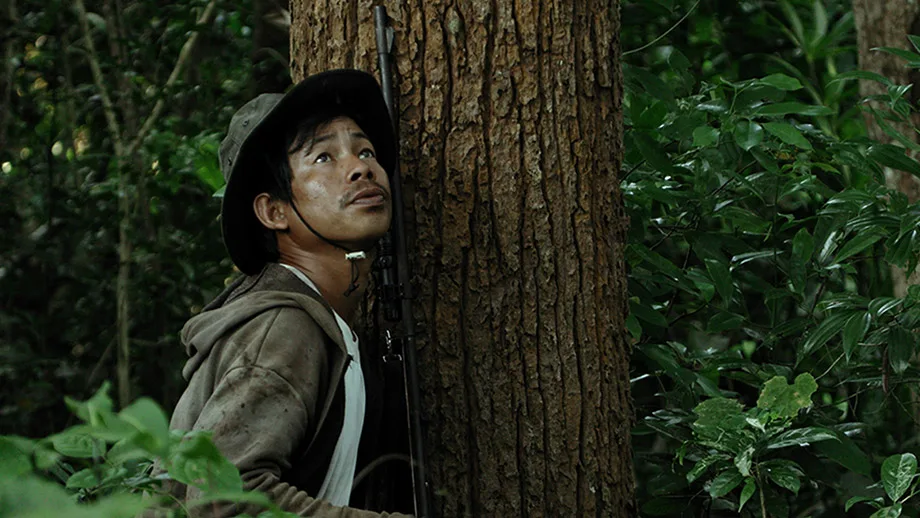
Cambodian filmmaker Rithy Panh is also an ambassador for his country’s film scene: Panh is the premier documentarian about the destruction wrought by the Khmer Rouge, and allusions to this dark period even appear in his new, mostly unrelated film, “We are the fruits of the forest. We hear references to the indigenous Bunong people being persecuted during the Pol Pot years, but the main villain of this film is capitalism: over footage of farmers engaging in subsistence practices that have existed for thousands of years, a representative from a village explains the Bunong people’s annual harvest calendar and the many ways it has been eroded—slowly, at first, then suddenly—by the encroachment of greedy landowners. There are moments of peace, of deep spiritual connection, but these are overshadowed by the inescapable feeling that these people are Earth’s last line of defense and that we are all failing.
Pahn’s film shows how climate change, corporate greed and colonial conquest came together to threaten the Bunong way of life; None of these cause-and-effect relationships will be new to savvy viewers, but there’s still something incredibly infuriating about the fact that even subsistence farmers in rural Cambodia have to worry about debt. The rawness of the film’s environmental message is reflected in its unadorned, handheld camerawork, filmed up close and among people over four immersive years. Just a warning to any vegetarians in the audience: one of the ways the Bunong survive is by hunting, and Pahn’s camera captures them slaughtering animals for food as unblinkingly as other aspects of their lives.
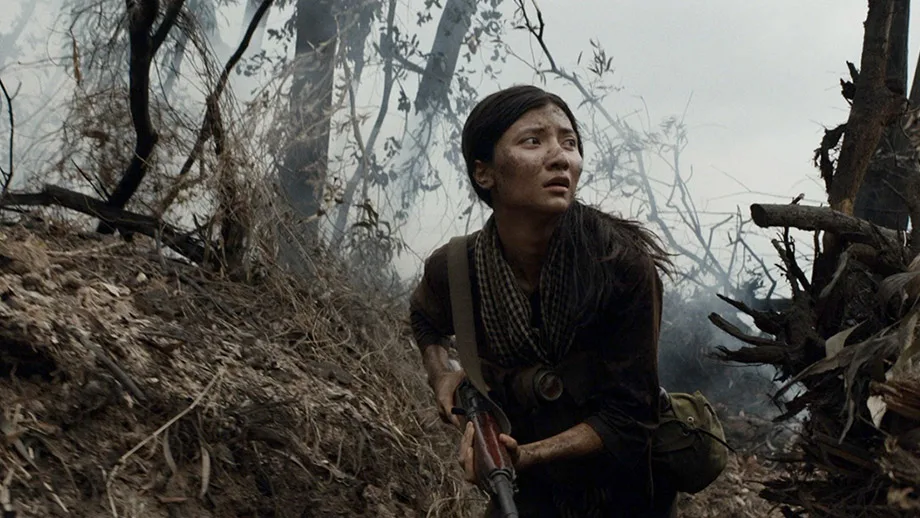
And even if it was not in the main competition program with the three films mentioned above, the Vietnamese film “Tunnels: Sun in the dark » is one I sought out specifically for its non-Western perspective. Like “Palestine 36,” which premiered in Toronto and won a major award here in Tokyo, director Bùi Thạc Chuyên’s film examines a historical conflict from a perspective generally inaccessible to Western viewers. In this case, the film follows a group of Viet Cong guerrillas hiding in an underground network known as the Chu Chi Tunnels during the Vietnam War.
The film takes a romantic view of war and sacrifice, with a cast of characters whose camaraderie in the early scenes clearly sets the stage for heartbreaking heroism later. And Chuyên keeps his word, in a series of intense action sequences that use the film’s claustrophobic setting to their advantage as the unit makes one last stand against the American soldiers who discover and infiltrate their stronghold. There’s some incredibly creative nightmare fuel here – think bamboo poles filled with venomous snakes trapped to fall on intruders’ heads – combined with ticking clock classics like characters stuck in an underground chamber that’s slowly filling with water.
It’s thrilling entertainment, and it has been incredibly popular in Vietnam, breaking box office records and reinforcing a sense of national pride when “Tunnels: Sun in the Dark” was released in local cinemas in April. (“The tunnels are the people’s war,” a captured officer tells a U.S. Army unit, giving a speech about the resilience of the Vietnamese spirit before blowing himself up with a hand grenade.) Predictably, she’s still looking for an American distributor.
Upcoming Movie Update
Berita Olahraga
News
Berita Terkini
Berita Terbaru
Berita Teknologi
Seputar Teknologi
Drama Korea
Resep Masakan
Pendidikan
Berita Terbaru
Berita Terbaru
Berita Terbaru