Vince Gilligan’s captivating ‘Pluribus’ is TV event of the year | TV/Streaming

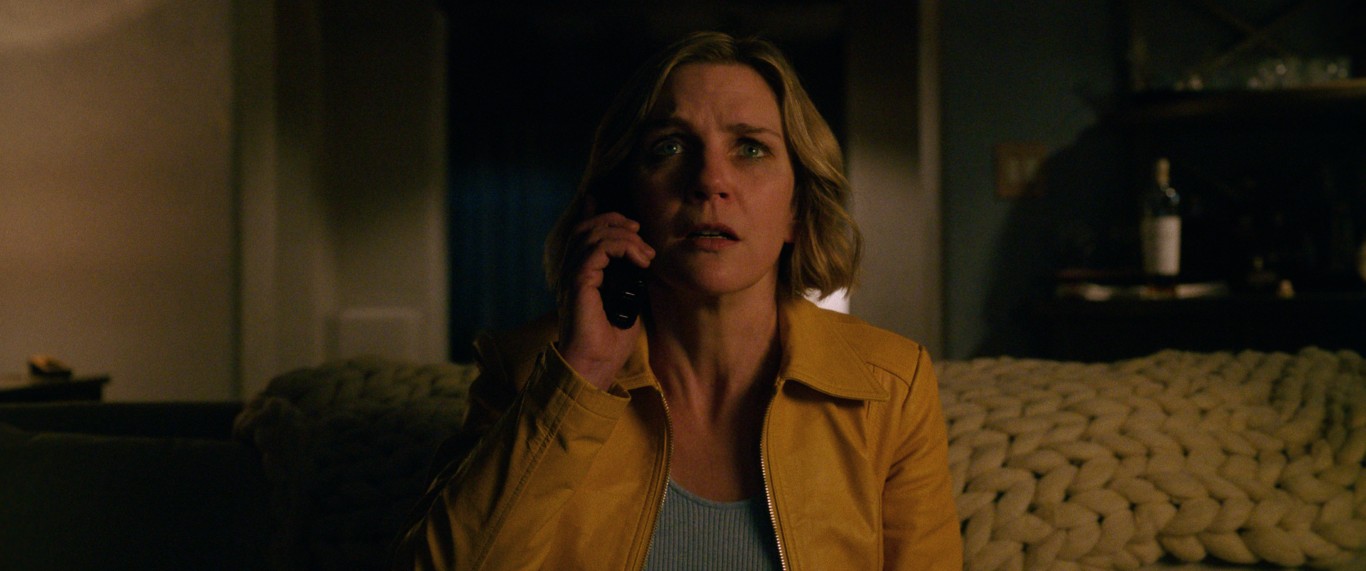
In the latest series from “Breaking Bad” creator Vince Gilligan, the detective genre gives way to a mind-boggling mix of science fiction and noir. Steeped in obvious inspirations, from “Invasion of the Body Snatchers” to less obvious expressions of James Ward Byrkit’s “Coherence,” Gilligan’s new Apple TV+ series begins with bestselling author Carol Sturka (Rhea Seehorn) reading the latest novel in her bestselling book series to a crowd of fans. She dutifully signs and takes photos, but once she’s done signing, she tells her driver that her work is “mindless shit.”
Far from the fans and shrouded in the darkness of a car, she looks dejected, not as if she hated the fans she spent the night with, but as if she hated the facade she had to put on while reading passages from her own work.
Elsewhere in the world, a scientist is bitten by a rat. As she begins to sanitize her hands, her body tenses violently and a childish but strange smile takes over her face. When Carol and her partner Helen (Miriam Shor) stop at a bar for a drink on their way home from Carol’s book tour, the other patrons’ bodies seize up in the same way…except Carol’s. As the city beyond them burns and a massive blackout occurs across the world, it becomes clear that an epidemic of some sort is affecting the people of Earth. But instead of a typical zombie virus or plague, Gilligan gives us a refreshingly different kind of epidemic: a virus that makes everyone on earth happy.
The problem is that Carol may be the unhappiest person in the world. Beyond her dissatisfaction with the world-famous book series she created, there is a deep-rooted discontent within her, eyes narrowing in suspicion and blows flying out of her mouth before she can even think to stop them. But all is not well in the world either, and Carol may not be as alone as she thinks. As the days pass, Carol receives a visit from Zosia (Karolina Wydra), who remains her guide and chaperone much to Carol’s chagrin, and who reveals to Carol that she is not the only one whose body has not been co-opted by this virus.
This is where the black inspirations begin. Desperate to understand what sets her and a select few apart from the rest of the world, Carol begins scouring the city for clues to anything outside of the new normal she finds herself in. She spends her nights barking at the sound of wolves in the distance, breaking into various buildings and drinking away her sorrows. These moments, despite being in the latter half of the series, are shrouded in intense neon lights, in contrast to the sunny backdrop present when Carol’s movements are monitored during the day. It’s a welcome change from the sterile environment she’s been forced to inhabit, where the hue of the sky seems too blue and the houses in her neighborhood blend together to create a mimicry of one another.
In her search for answers, Carol exhausts herself to the bone trying to find a way to return the world to the way it was, before inevitably becoming an unwilling participant in this new version. While there are a handful of other characters in “Pluribus,” it’s primarily a one-woman show, led by an incredibly sharp Seehorn. As Carol collapses under the new information she receives each day, her eyes strain under an invisible but present weight. Every day her resolve wavers even more, she breathes hard, heaving her chest as if trying to keep a wild animal buried inside her.
Carol’s misfortune began long before the outbreak, and we get small hints that she’s been plagued by darkness for decades, which has since bred a harsh view of the world and the people in it. Every time she leaves the house, a resounding “Hi Carol!” is acclaimed by the mouths of every person she meets. Yet Carol takes this greeting as a threat, distancing herself from people who seem to want to help her and snickering whenever their sickly sweet voices offer help.

While Seehorn undeniably controls the screen alone, Carol’s relationship with her chaperone is one of the series’ many highlights. The former’s hard shell is impossible to break, but Zosia persists, as do all newly infected people on earth. Her smile never falters and her soft voice never grows cold despite Carol’s increasing paranoia and verbal abuse. There’s a back-and-forth present between them that’s fascinating to watch, and slowly it becomes clear that even though Zosia represents everything Carol is supposed to hate, there’s something about the woman that seems familiar, as if a piece of the old world might still exist in this new one.
With all the conflict in the world gone, it becomes clear that Carol’s hatred for her job, her consumers, and even herself was driving her to continue in life, and with all of that gone, she no longer has a purpose. At the end of the world, facing the desolate desert of Albuquerque, Carol must accept her new reality. Instead, she creates a new one, steeped in conspiracy and filled with bad guys who want to get her. For a while, it seems like everything is fine, but as she digs deeper into the outbreak and its origins, perhaps her paranoia isn’t so misguided after all.
As the story unfolds, “Pluribus” is quickly shaping up to be one of this year’s most complicated and exciting TV series, which, with a second season already in the works, has the potential to define this decade the way Gilligan’s previous series defined the turn of the century.
Seven episodes were screened for review. “Pluribus” premieres on Apple TV+ on November 7.
Upcoming Movie Update
Berita Olahraga
News
Berita Terkini
Berita Terbaru
Berita Teknologi
Seputar Teknologi
Drama Korea
Resep Masakan
Pendidikan
Berita Terbaru
Berita Terbaru
Berita Terbaru