Wong Kar-wai’s beautiful and captivating “Blossoms Shanghai” comes to Criterion Channel | TV/Streaming


Earlier this year, I had the chance to sit at Chicago’s venerable Music Box Theater and attend a 25th anniversary screening of “In the Mood for Love,” Hong Kong filmmaker Wong Kar-wai’s masterful and visually ravishing exploration of romantic desire that became an instant classic upon its first screening in 2000.
Although I once again found myself swept away by its alternately sweet and sad mood, the superb cinematography and the off-the-charts chemistry between co-stars Tony Leung Chiu Wai and Maggie Chung, it was also a sad reminder that Wong hadn’t released a new film since 2013’s “The Grandmaster.” the most unique of cinema sitting on the sidelines seemed almost too cruel to bear.
Turns out he wasn’t exactly twiddling his thumbs at that point. In late 2013, he acquired the rights to Jin Yucheng’s award-winning novel Flowers and set to work adapting it as his first television project. After a long production period – hardly a surprise for a known perfectionist like Wong – the series, now dubbed “Blossoms Shanghai”, debuted on Chinese television in late 2023 as a 30-episode extravaganza, with each episode directed by Wong himself, which received rave reviews and a wide audience.
Finally, Criterion Channel, which has been the primary streaming source for most of Wong’s films in recent years, will air the series starting November 24, with three new episodes every Monday until January 26. With each episode lasting just under 50 minutes, this essentially means that viewers will get the equivalent of a new Wong film once a week for ten weeks straight, which should more than make up for his absence over the past decade.
The series begins in the early 1990s, around the time the Shanghai Stock Exchange reopened, as the country gradually adopted an economic reform that would change things in many ways. One person determined to take advantage of this is an ambitious young man named Ah Bao (Hu Ge), who places himself under the tutelage of old financial genius Uncle Ye (You Benchang), who sends him to complete a series of tasks involving quickly borrowing large sums of money to see if he has what it takes to succeed in the cutthroat world of finance.
Although things are a little rocky at first – he gets involved in a stock deal that goes south and leaves many investors in the lurch – he soon prospers and, now known as Mr. Bao, is a Gatsby figure among those in the glamorous neighborhood known as Huanghe Road, where powerful figures in finance and politics gather to eat in lavish restaurants while trying to figure out who he is, what motivates him and, in some cases, how to finally reduce him to its size – when opened. In certain scenes, we see him being hit in the street by a driver who takes him to the hospital.
After his recovery, he becomes involved in a deal with the factory manager, Mr. Fan (Dong Yong), to capitalize on the French T-shirt craze by producing and distributing a new line of shirts, in “flame-kissed cotton”, which they hope to integrate into major luxury stores despite their lack of reputation in this area. However, Mr. Fan, who lives in the provinces, quickly gets swept up in the glitz and glamor and almost attempts to derail the deal in order to secure what appears to be a better deal from a flashy potential competitor named Mr. Wei (Ryan Zheng).
However, Bao plays a low-key but effective game of hardball that excludes Wei and when the shirts are finally ready for release, he uses a marketing gimmick that quickly makes them the hottest item in town, a coup that only enhances his reputation as a brilliant businessman while forcing his now-growing list of enemies and rivals to sharpen their knives in hopes of finally taking him down.
And since this is a Wong Kar-wai story, it won’t be all that surprising to learn that there is also a woman with whom Bao shares an enigmatic relationship – in this case, there are almost a plethora of them. There is Ling Zi (Ma Yili), with whom he has a history and who runs Tokyo Nights, a small, unpretentious restaurant where he prefers to eat rather than the more upscale one on Huanghe Road. There’s Ms. Wang (Tang Yan), a friend who works at the Ministry of Foreign Trade, who many suspect is his girlfriend, a rumor that could ruin his potential for career advancement if proven true. Finally, there’s Li Li (Xin Zhilei), a newcomer to the neighborhood who has just opened Grand Lisbon, an ultra-glamorous restaurant that makes her the target of several neighboring restaurateurs, who play dirty tricks on her in hopes of forcing her to close.
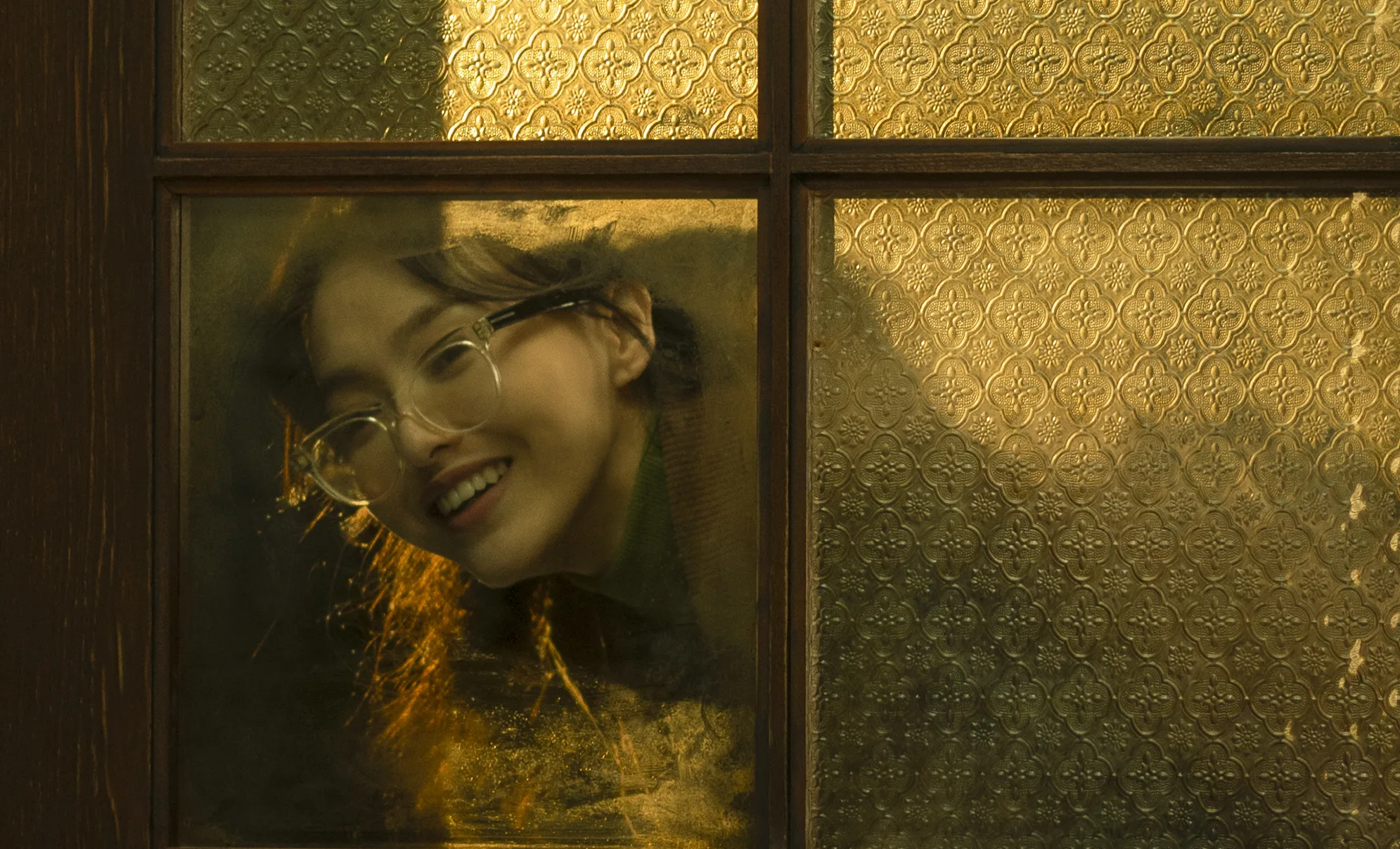
Each of these relationships also causes problems. Noticing the popularity of the shirts, Ling Zi tries to find a way to sample the benefits herself, a decision that threatens their friendship when discovered. When fellow restaurateurs cause Li Li’s kitchen staff to leave and shipments of key ingredients to stop, Bao quietly pulls a few strings to save the situation, fueling more and more rumors about the true nature of their relationship. As for Ms. Wang, their relationship is threatened when, after helping her during the confrontation with Wei over Fan and the shirts, he buys her a pair of pearl earrings that she does not bring back to her superiors, thinking they were simply a cheap thank-you gift, only to have her career hang in the balance as an investigation looks into both the monetary value of the gift and the intentions behind it.
Granted, there are a few awkward moments here and there, many of which are the inevitable result of the sprawling nature of the thing. The first two or three episodes have to set up a lot of storytelling and introduce viewers to many characters – a job made more complicated by the fact that Wong introduces them in an oblique manner intended to shroud them in mystery – and the mass of information they have to absorb at once can be a bit confusing at times. Once all that’s more or less settled, things become more coherent and simpler – at least as simple as what you’re likely to see in a Wong vehicle – but even as the narrative tightens up towards the end of this sequence of episodes, you may be wondering how exactly Wong plans to expand it over the next 18 episodes.
For starters, anyone worried that Wong might have to sacrifice his usual cinematic approach to work within the parameters of the television world will be relieved to know that this is indeed a Wong vehicle through and through, looking of a piece with such classics as “Chungking Express,” “In the Mood for Love” and “2046.” Visually, it’s as stunning as anything you’ll see this year on the big or small screen. There are so many moments of swoon-worthy beauty that there are times when you might need to pause for a moment to avoid becoming overwhelmed. Sure, it’s easy enough to make the opulence on display look incredible, but cinematographer Peter Pau and his team take something as simple as a character tucking into a bowl of porridge and invest it with enough beauty and hypnotic freshness to make you wish you had a poster of it hanging on your wall.
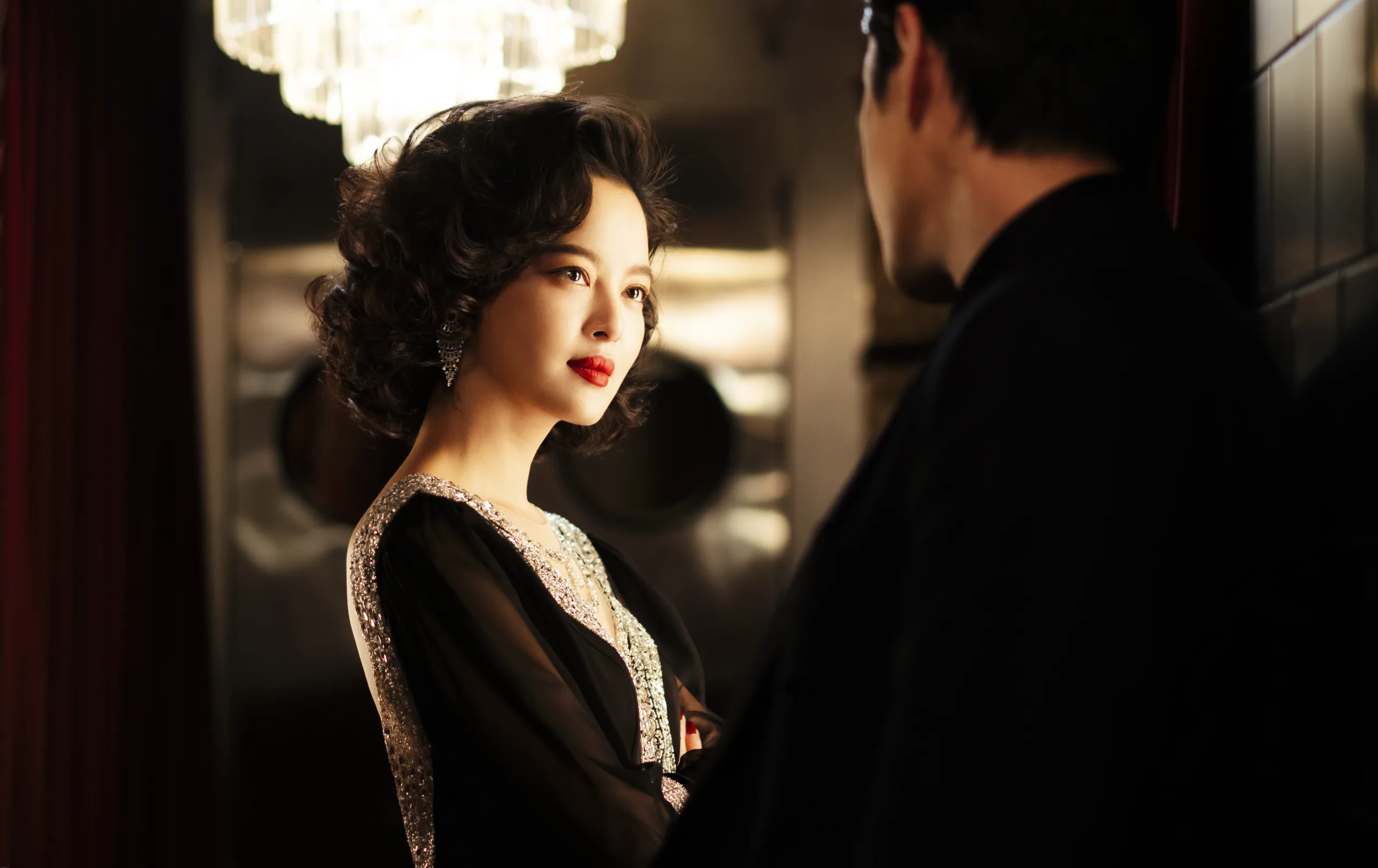
From a storytelling perspective, even though the series is long and filled with characters, subplots, and flashbacks to eras not covered in the main body of the series, Wong and writer Qin Wen found a way to keep things moving without getting bogged down in too many details or detailed explanations. Even if you have little practical knowledge of how Shanghai’s financial markets worked in the 1990s, you should be able to follow along.
The performances are also all impressive. Hu Ge cuts a dashing yet mysterious figure as Ah Bao, appearing both friendly and aloof while quietly hinting at mysteries about his true nature that will likely be revealed in later episodes. As the key women in his life, Ma Yili, Tang Yan, and And while I won’t reveal any in particular so you can discover them for yourself, let’s just say that Wong’s ability to find and deploy the right needle drop at the right time proves as sharp as ever here.
Because “Blossoms Shanghai” is a long-running project in which every episode was directed by the same world-renowned auteur, I suspect the filmmakers may soon find themselves reigniting the debate that swirled around David Lynch’s equally audacious “Twin Peaks: The Return” by wondering whether what Wong has given us should be considered a true television series or whether it could be argued that it is a film that lasts nearly 24 hours. Regardless of your position, once you start watching it, you will be hooked.
Twelve episodes sent for review. Starts on The Criterion Channel today, November 24, with three new episodes each week.
Upcoming Movie Update
Berita Olahraga
News
Berita Terkini
Berita Terbaru
Berita Teknologi
Seputar Teknologi
Drama Korea
Resep Masakan
Pendidikan
Berita Terbaru
Berita Terbaru
Berita Terbaru